Valorant Champions Shanghai group stage Day 2 delivers the fastest elimination picture yet
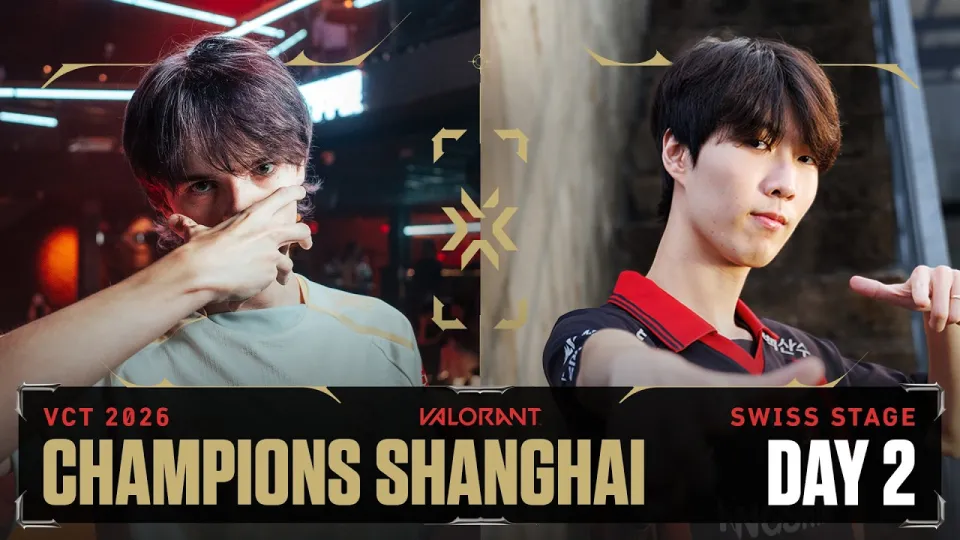
Video: VALORANT Champions Shanghai — Group Stage — Day 2
You can order the same kind of articles for your own video to boost it on YouTube and Google. Just message the Telegram bot @sat_sit_bot. The bot writes and publishes the articles itself (with your YouTube video embedded) on popular topical websites (no ads). Your first 50 articles are free.
· based on the channel VALORANT Champions Tour
Valorant Champions Shanghai is the 2026 world championship of the VALORANT Champions Tour, and the Group Stage Day 2 broadcast on the official VALORANT Champions Tour channel covers the second day of the opening phase, where 16 teams from Americas, CN, EMEA and Pacific fight for playoff seeding. The event runs from September 24 to October 18, and the day's matches moved the bracket picture fast enough that viewers called it a speedrun. Official schedules, scores and updates are published through the VALORANT Esports hub, which is the fastest place to confirm results before the next broadcast.
What Valorant Champions Shanghai actually is
Valorant Champions Shanghai is the season-ending world championship, the tournament that decides the 2026 VALORANT World Champion. Sixteen teams qualify through the four international leagues, and the event is produced by the VALORANT Champions Tour, which also runs Masters and the regional circuits. The 2026 season arrived in Shanghai after two Masters events where a new champion rose each time, breaking the expectations that had followed the established favorites. The description frames the city as a place where history and the future live side by side, and the tournament branding leans into that idea: familiar names, new contenders and a younger generation of challengers all sharing one stage. Partners for the season include AWS, Coinbase, EWC, ENC, Globant, HyperX, Mastercard, OnePlus, Red Bull, Secretlab and Verizon, so the broadcast carries the polish of a flagship esports production rather than a regional qualifier.
How the group stage works and what Day 2 decides
The Group Stage Day 2 stream covers the second day of group play, the phase that separates the 16 qualified teams into the playoff bracket. Group stage formats at Champions are built around round-robin or double-elimination structures depending on the year, and the practical outcome is the same: every map matters for seeding, and a single bad series can push a team into an elimination match. Day 2 sits early enough that no team is mathematically out in most groups, but late enough that the first real trends appear. Those trends are what make the day worth watching in full rather than through highlights. A team that drops its opening series and then loses the second enters the final round of group matches knowing it must win, often against an opponent with nothing to lose. That dynamic produces the lopsided scorelines that stood out on this broadcast, because one side is playing for survival while the other is already thinking about the bracket.
Reading the Day 2 results without spoilers
A spoiler-free approach works best for a broadcast this long, because the result of one series changes how the next one should be watched. The practical method is straightforward:
- Check the match order in the video description or the official schedule before pressing play, so you know how many series are in the block.
- Watch the series in the order they were played; group stage days are usually scheduled so that the most decisive matches come last.
- Skip the analyst desk segments only if you already know the standings, since those segments often reveal earlier results while previewing later ones.
- Use the official VALORANT Esports channels for the bracket after the day ends, rather than the comment section, where spoilers appear within minutes.
Viewers in the comments specifically asked for spoiler blocking, and the top-liked comment on the broadcast is a spoiler-blocker timestamp guide. That is a reasonable signal that the day's results were dramatic enough to be worth protecting.
Why the China debate keeps coming up
The most heated discussion around Valorant Champions Shanghai concerns China's four slots at the world championship. The criticism is blunt: some viewers argue that CN teams have not converted their slots into deep international runs, that the slots would be better merged into Pacific, and that lopsided group stage matches look like mismatches between different competitive tiers. The counterargument is structural rather than sentimental. China has one of the largest player bases in the world, its own league ecosystem, and a dedicated server region, which is why the region receives direct qualification rather than competing through Pacific. Slot allocation is also a long-term investment: a region that only earns international experience through play-ins develops more slowly than one that sends teams directly to the main event. The 2026 season matters here because the description notes that new contenders have emerged and expectations have been broken twice at Masters, which is exactly the pattern a region needs before its results at Champions start to match its infrastructure.
The mismatch question and what lopsided maps mean
Lopsided map scores in a group stage are not automatically evidence that a team does not belong at the event. Group stage draws are seeded to create variety, and the gap between the best and the weakest qualified team at any world championship is real but narrower than a single scoreline suggests. Several factors inflate blowouts:
- Map pool comfort, where one team's permaban does not cover the map the opponent is strongest on.
- Pistol round conversion, which swings economy and can decide three or four rounds in a row.
- First-series nerves for teams making a debut on the Champions stage.
- Preparation time, since group stage days are compressed and teams cannot build a full anti-strat for every opponent.
A 13-4 map is usually one team winning both pistols and converting the bonus rounds. That is a real skill gap in that specific match, but it does not predict the rematch, and it says even less about a region as a whole. The more useful signal from Day 2 is which teams won their close maps, because those are the series that tend to repeat in the playoff bracket.
Communication, interviews and broadcast pacing
Two production complaints recurred in the comments: interview translation taking longer than the original answer, and the overall pace of the day. Translation delays are a consequence of running a genuinely global broadcast with four regions and multiple languages, and the alternative, cutting interviews short, removes context that international fans rarely get otherwise. The pacing complaint is more interesting. A day that feels like a speedrun usually means several series ended quickly, which compresses the broadcast block and leaves more filler between matches. For viewers who want the competitive content without the downtime, the efficient approach is to watch the series that went the distance and skip the ones decided by a wide margin, using the match order as the guide.
Useful links
- Official VALORANT Esports news and updates: https://www.valorantesports.com/news
- Event photos: https://www.flickr.com/photos/valorantesports/
- X/Twitter: https://x.com/valorantesports
- Facebook: https://www.facebook.com/ValorantEsports/
- Instagram: https://www.instagram.com/valorantesports/
- TikTok: https://www.tiktok.com/@valorantesports
- Twitch: https://www.twitch.tv/valorant
What Day 2 tells us about the Shanghai bracket
Group Stage Day 2 at Valorant Champions Shanghai narrowed the field of plausible playoff teams without eliminating anyone outright, and it did so in a way that rewarded teams with deep map pools over teams with one signature pick. The day's defining feature was the gap between close series and blowouts, which is typical of an early group stage where preparation time is short and seeding is still uneven. The bigger storyline remains the one the broadcast itself frames: a season in which two Masters titles went to new contenders, arriving at a world championship where the established names no longer have a guaranteed path. Whether China's four slots translate into playoff results is the question this tournament will answer on the server rather than in the comment section. For full match schedules, bracket updates and future broadcasts, follow the VALORANT Champions Tour channel and the official VALORANT Esports accounts at VALORANT Esports on X, where results and announcements are posted as the event runs through October 18.
Key takeaways
- Valorant Champions Shanghai runs September 24 to October 18 with 16 teams from Americas, CN, EMEA and Pacific.
- The event crowns the 2026 VALORANT World Champion and follows two Masters titles won by new contenders earlier in the season.
- Group Stage Day 2 is the second day of the opening phase, streamed by the VALORANT Champions Tour channel.
- Viewers flagged the day as unusually short, with several matches ending in lopsided map scores.
- China's four slots and the region's international results dominated the comment section debate.
Questions & answers
How many teams play at Valorant Champions Shanghai and where do they come from?
Sixteen teams compete at the event, drawn from the four international regions: Americas, CN, EMEA and Pacific. They qualify through their regional leagues and the season's Masters results. The tournament runs from September 24 to October 18 and crowns the 2026 VALORANT World Champion.
Why do some viewers say China should not have four slots at Champions?
The argument is that CN teams have not converted their slots into deep international runs, so the slots would be better used elsewhere, possibly merged into Pacific. The counterargument is structural: China has its own league, a huge player base and a dedicated server region, and direct qualification is how a region builds international experience over time.
Do lopsided map scores in the group stage mean a team does not belong at the event?
Not on their own. Blowouts are often driven by pistol round conversion, map pool mismatches and short preparation time rather than a permanent skill gap. A 13-4 map usually means one team won both pistols and converted the bonus rounds, which says little about how a rematch would go.
What is the best way to watch a long group stage broadcast without spoilers?
Check the match order first, then watch the series in the order they were played, since decisive matches are usually scheduled last. Avoid the comment section until you are done, because results appear there within minutes, and use the official VALORANT Esports channels for the bracket afterward.
Source: VALORANT Champions Shanghai — Group Stage — Day 2 · Markdown version